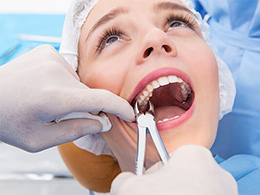

General Dental Services are your first line of defense against oral health problems. Although general dentists primarily provide preventative care, extractions and restorative treatment, they often are able to provide a wide array of dental treatments, including cosmetic procedures.
At Dental Members Springwood, we would like to work with you to develop a customized dental hygiene plan that incorporates dental check-up and clean, X-ray and use of other modern sophisticated diagnostic equipments to prevent, diagnose or treat problems as early as possible.
Our dentists are also capable of providing a variety of modern restorative procedures in the development of a comprehensive treatment plan that will help you to have a beautiful smile.
Tooth Restoration Procedures practiced at Dental Members Springwood
1. Bonding:
The term bonding/ ceramic or resin fillings is used in dentistry to describe permanently attaching dental materials to your teeth using dental adhesives and a high intensity curing light. Bonding may take care of chips, gaps between the teeth, staining, splotches from wearing braces, crookedness or even reshaping the whole tooth that are displeasing. Plus, it’s relatively inexpensive.
2. Dental Fillings:
A dental filling is a type of restorative treatment used to repair minimal tooth fractures, tooth decay or otherwise damaged surfaces of the teeth. Filling materials, which include composite, ceramic, and silver amalgam, may be used to even out tooth surfaces for better aesthetics, or chewing.
One of the most common found oral health issue during scheduled cleanings is caries. Your dentist will examine affected teeth using a dental camera as well as take an X-ray to determine the extent and exact location of the cavity.
Once it is determined that a filling is needed, we will advise you of your options for filling and sealing the cavity to prevent further caries and structural damage to the tooth. Based on location of the cavity, esthetic needs, biting force, durability, cost, number of visits necessary and your preference, your dentist will determine the best option of material, whether that be direct composite bonding, amalgam (silver), gold or ceramic inlays/onlays created in laboratory, or using in-office CAD/CAM equipment.
4. Extractions:
Although tooth extraction is not usually the first line of dental treatment, sometimes it may be inevitable.
Why would I need a tooth extraction?
Some of the reasons why a tooth may need to be extracted include
- Significant caries damaging structural integrity of the tooth
- Gum disease
- To improve appearance, such as with orthodontic treatment
- Extensive tooth cracks
- Poor positioning or functionality
Tooth extraction can be completed in the dental chair using local anaesthetic, under gas sedation in the dental chair or under general anaesthetic in a private hospital. The extraction procedure may or may not involve surgery. The procedure will be determined by a patient’s health, age, the location of the tooth and the complexity of the root formation. We will discuss the best treatment options for you and will require an x-ray of the jaw or a CT scan in order to view the root location and formation, and the density of the supporting bone.
The cost of having a tooth extracted or removed varies depending on the tooth and the complexity of the extraction procedure. Your dentist will provide you with a treatment plan outlining the cost of the treatment before proceeding.
As with all types of surgery, dental extractions have associated risks and possible postoperative complications. These will be discussed with you prior to the commencement of any procedure.
Any surgical or invasive procedure carries risks.
Once a tooth has been removed, our dentists will provide you with the treatment options available for replacing the lost tooth. This may include options such as implants, fixed bridges or dentures.
3.Dental Implants:
In many cases, dental implants may be the only choice to restore all necessary functions of the teeth and supporting structures. An implant can replace a single missing tooth and multiple implants can be used to support a dental bridge for the replacement of multiple missing teeth. Implants can also be used to increase the retention of dentures, helping to minimize gum irritation. Another implant advantage is that they do not require the preparation of adjacent teeth that would be necessary for bridgework.